Major Ports on the Rhine: Rotterdam, Duisburg, Basel & the Busiest Inland Harbours in Europe
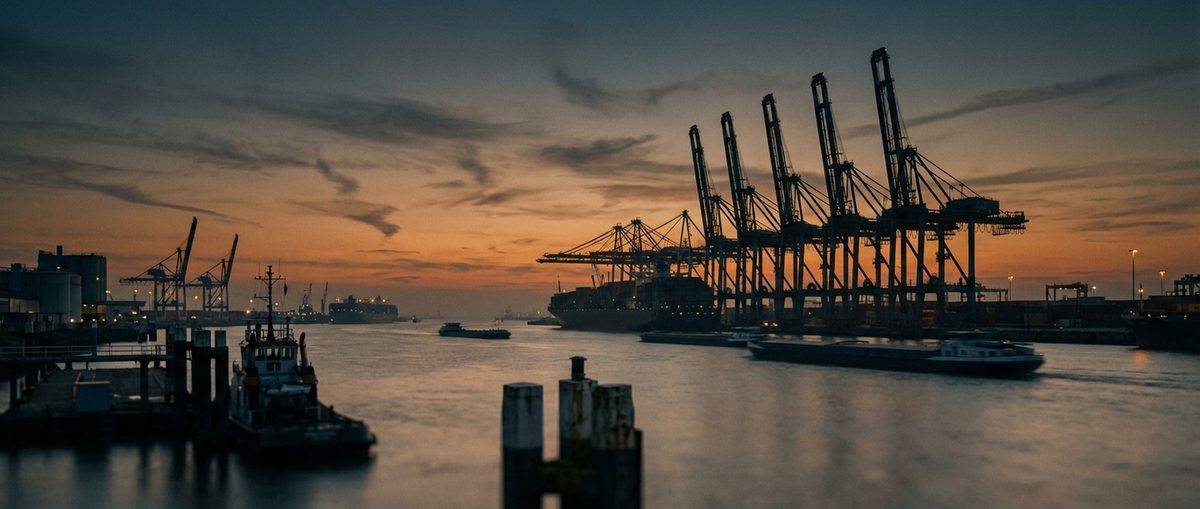
The Rhine is more than a river — it is a connected system of ports, terminals, and logistics hubs that together form Europe’s most productive inland waterway corridor. Eight major ports handle the bulk of the approximately 285 million tonnes of cargo that travel the river each year. Each has its own history, infrastructure, and specialisation, but together they function as a single supply chain stretching over 830 navigable kilometres from the North Sea to the Swiss border (Source: CCNR, 2024).
The Rhine Port Network at a Glance
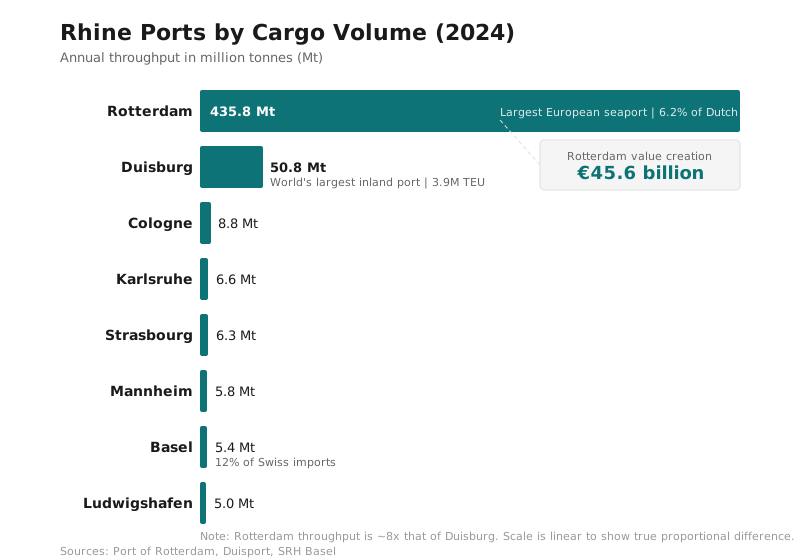
| Port | Country | Rhine-km | Annual Throughput (million tonnes) | Primary Specialisation |
|---|---|---|---|---|
| Rotterdam | Netherlands | km 1,000 (mouth) | ~440 (total seaport) | Gateway seaport, containers, petroleum, bulk |
| Duisburg (duisport) | Germany | km 775 | ~110 (inland) | Containers, steel, intermodal logistics |
| Cologne (HGK) | Germany | km 688 | ~12 | Chemicals, petroleum, containers |
| Neuss/Düsseldorf | Germany | km 740 | ~15 | Steel, agricultural products, containers |
| Mannheim/Ludwigshafen | Germany | km 424 | ~19 | Chemicals (BASF), petroleum, grain |
| Karlsruhe | Germany | km 360 | ~7 | Petroleum (MiRO refinery), building materials |
| Kehl/Strasbourg | Germany/France | km 297 | ~8 (combined) | Grain, steel, general cargo |
| Basel (Schweizerische Rheinhäfen) | Switzerland | km 166 | ~5.5 | Petroleum, chemicals, containers, grain |
(Sources: CCNR, 2024; individual port authorities, 2024; Destatis, 2024)
Rotterdam: The Gateway to the World
Rotterdam is where the Rhine meets the sea. As Europe’s largest port by total throughput — approximately 440 million tonnes in 2023, including both seagoing and inland waterway traffic — Rotterdam is the primary node connecting Rhine barges to global ocean shipping routes (Source: Port of Rotterdam Authority, 2024). Around 100,000 inland vessels call at Rotterdam each year, and approximately one-third of all containers arriving by sea continue their journey inland via the Rhine.
The port stretches over 40 kilometres along the Nieuwe Maas and Europoort waterways. Its Maasvlakte 2 extension, completed in 2013, added 2,000 hectares of port area built on reclaimed land in the North Sea — a testament to Rotterdam’s relentless expansion to serve intercontinental trade. Rotterdam’s inland waterway connections are not limited to the Rhine: the port also feeds cargo into the Maas, Waal, and a network of Dutch and Belgian canals, making it the undisputed hub of Northwestern European logistics.
Duisburg: The World’s Largest Inland Port
Duisburg sits at the confluence of the Rhine and Ruhr rivers, a location that made it the natural hub for the Ruhr industrial region’s shipping needs since the 19th century. Today, duisport handles approximately 110 million tonnes of cargo per year across its multiple terminals, making it the world’s largest inland port by volume (Source: duisport, 2024). Its container throughput alone exceeds 4 million TEU annually, served by a trimodal network of barge, rail, and road connections.
Duisburg has reinvented itself as a logistics hub far beyond its steel-and-coal origins. The port is a key terminus of the China-Europe rail freight corridor (Yixinou), connecting Rhine barge logistics directly to the Belt and Road network. Over 60 trains per week arrive from Chinese cities including Chongqing, Yiwu, and Zhengzhou (Source: duisport, 2024). This east-west rail link, combined with north-south Rhine barge connections, makes Duisburg one of the most strategically important freight nodes in all of Europe.
Cologne: The Chemical and Container Hub
The ports of Cologne, operated by Häfen und Güterverkehr Köln (HGK), handle approximately 12 million tonnes of cargo annually. Cologne’s location at the transition between the Lower Rhine and the Middle Rhine gives it strategic importance for distributing goods into the densely populated Rhine-Ruhr and Rhine-Main metropolitan areas. The port complex includes dedicated terminals for petroleum products, chemicals, and a growing container operation. HGK also operates one of Europe’s largest inland shipping fleets, with over 350 vessels (Source: HGK, 2024).
Neuss/Düsseldorf: Steel and Agriculture
The combined ports of Neuss and Düsseldorf, located across the Rhine from each other near Rhine-km 740, handle approximately 15 million tonnes per year. Neuss is a major transhipment point for steel products, agricultural goods, and increasingly containers. The port benefits from its proximity to both the Ruhr industrial area and the consumer market of the Düsseldorf metropolitan region, which has a population of over 3 million (Source: Neuss-Düsseldorfer Häfen, 2024).
Mannheim/Ludwigshafen: Chemistry on the Rhine
The twin cities of Mannheim and Ludwigshafen face each other across the Rhine at kilometre 424, and together they form one of the most industrially significant port complexes on the entire river. Mannheim’s public port handles approximately 8 million tonnes of general cargo, grain, and building materials. Across the river, BASF operates its own private port facilities at Ludwigshafen, receiving and dispatching millions of tonnes of chemical raw materials and finished products by barge each year. The combined throughput of both banks exceeds 19 million tonnes (Source: Mannheim port authority, 2024; BASF, 2024). When I visit Ludwigshafen for ecological research, the sheer volume of tanker traffic entering and leaving the BASF site is a constant reminder of how tightly the Rhine’s industrial and ecological identities are intertwined.
Karlsruhe: The Refinery Port
Karlsruhe’s port is dominated by a single customer: the MiRO (Mineraloelraffinerie Oberrhein) refinery, Germany’s largest oil refinery by crude processing capacity at approximately 16 million tonnes per year. MiRO receives the bulk of its crude oil by pipeline from Mediterranean ports, but refined petroleum products — diesel, gasoline, jet fuel, heating oil — are distributed downstream and upstream by Rhine barges. The port handles approximately 7 million tonnes annually, with petroleum products accounting for the majority (Source: KVVH, 2024).
Kehl/Strasbourg: Franco-German Gateway
The twin ports of Kehl (German bank) and Strasbourg (French bank) illustrate the Rhine’s role as both a border and a connector. The Port Autonome de Strasbourg handles approximately 6 million tonnes of cargo, with strengths in grain (serving the agricultural regions of Alsace), steel, and general cargo. Kehl adds another 2 million tonnes, primarily building materials and project cargo. Together, they serve as the primary Rhine gateway for eastern France, and Strasbourg’s position as the seat of the European Parliament and the CCNR adds diplomatic significance to its commercial role (Source: PAS, 2024; Kehl port authority, 2024).
Basel: End of the Line, Start of Switzerland
Basel is where the navigable Rhine ends. The Schweizerische Rheinhäfen (Swiss Rhine Ports) — comprising the port areas of Kleinhüningen, Birsfelden, Auhafen, and Muttenz — handle approximately 5.5 million tonnes of cargo per year. For landlocked Switzerland, these ports are a lifeline: roughly 10% of all Swiss imports arrive by Rhine barge, including petroleum products, chemicals, grain, and containerised goods (Source: SRH, 2024).
Basel is also a turnaround point for Rhine river cruises, with several cruise ship berths near the city centre. The port’s strategic significance is amplified by its position at the junction of Switzerland, France, and Germany — the so-called Dreiländereck (three-country corner). Switzerland’s reliance on the Rhine for imports makes Basel uniquely vulnerable to low-water disruptions: during the 2018 drought, fuel supplies in Swiss petrol stations tightened noticeably as barge deliveries slowed (Source: SRH, 2024).
The Network Effect
What makes the Rhine port system powerful is not any single port, but the network. A container arriving at Rotterdam from Asia can be on a barge to Duisburg within hours, then transferred to rail or truck for final delivery anywhere in Central Europe. Petroleum refined in Rotterdam flows upstream to tank farms at Cologne, Karlsruhe, and Basel. Grain harvested in Alsace moves downstream through Strasbourg to export terminals at the coast. This interconnectedness is what gives the Rhine shipping corridor its unmatched economic significance.
The challenge for the port network is adaptation. The same climate pressures that affect the river’s ecosystems also threaten its ports. Low water events force vessels to reduce loads, and extreme floods can shut down port operations entirely. Investing in resilient infrastructure — deeper berths, flexible crane systems, multimodal backup options — will be essential for keeping these eight ports competitive in the decades ahead. The ports that invest early in trimodal flexibility and climate adaptation will be the ones that thrive.
Sources & References
- Port of Rotterdam: Europe’s Largest Seaport — 435.8 Million Tonnes
- Duisport: World’s Largest Inland Port
- CCNR: Rhine Port Statistics