Rhine River Cruises: Routes, Highlights & the Best Way to Explore the Rhine by Boat
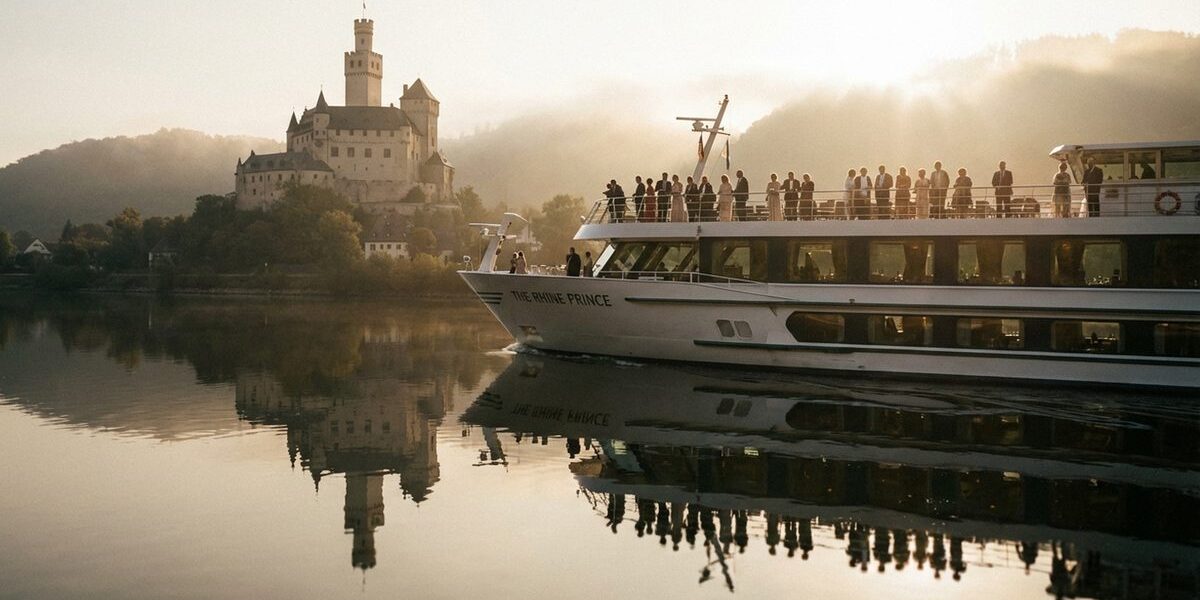
There are few journeys in Europe that compress so much history, culture, and landscape into so little distance as a cruise on the Rhine. In the space of a few days, you pass from the half-timbered wine villages of the Upper Middle Rhine through the industrial heartland of the Ruhr and into the wide, wind-swept polders of the Dutch delta. Along the way, you encounter over 40 medieval castles, six UNESCO World Heritage landscapes and monuments, and some of the most productive vineyards on the continent (Source: IG RiverCruise, 2024).
I have travelled the Rhine by research vessel, ferry, and cruise ship, and each perspective reveals a different river. But for sheer scenic density, nothing matches the stretch between Koblenz and Rüdesheim — the heart of the UNESCO World Heritage Upper Middle Rhine Valley.
The Classic Rhine Cruise Route
The most popular Rhine cruise itinerary runs between Basel (Switzerland) and Amsterdam (Netherlands), covering approximately 850 kilometres over 7–10 days. Most operators offer this route in both directions, with daily stops at cities and towns along the way. Shorter itineraries — 3–5 days focusing on the scenic Middle Rhine between Cologne and Strasbourg — are also widely available.
Key stops on the classic route include:
- Basel — The three-country corner (Switzerland, France, Germany); world-class art museums including the Kunstmuseum and Fondation Beyeler; the medieval old town
- Strasbourg — European Parliament; Gothic cathedral with its astronomical clock; Grande Île (UNESCO World Heritage); Alsatian cuisine
- Heidelberg (via Mannheim) — Germany’s most famous castle ruin; the old university town with its baroque old town and Philosopher’s Walk
- Rüdesheim — Wine culture capital of the Rheingau; the Drosselgasse; cable car to the Niederwald Monument; Riesling tastings
- The Loreley — The legendary cliff at Rhine-km 555, where the river narrows and legend says a siren lured sailors to their doom. Learn more about the Loreley legend and its cultural significance
- Koblenz — The Deutsches Eck (German Corner) where the Moselle meets the Rhine; Ehrenbreitstein Fortress with panoramic views
- Cologne — The twin-spired Gothic cathedral (UNESCO World Heritage); 2,000 years of Roman history; vibrant Kölsch beer culture and the Altstadt
- Düsseldorf — Modern architecture in the MedienHafen; the elegant Königsallee; Japanese quarter
- Kinderdijk (Netherlands) — Iconic ensemble of 19 windmills (UNESCO World Heritage), the most photographed site in the Dutch delta
- Amsterdam — Canal ring (UNESCO World Heritage); Rijksmuseum; Anne Frank House; the end point for most downstream itineraries
The Middle Rhine: The Scenic Highlight
The Upper Middle Rhine Valley between Koblenz (Rhine-km 590) and Bingen/Rüdesheim (Rhine-km 526) is the undisputed highlight of any Rhine cruise. This 65-kilometre stretch was designated a UNESCO World Heritage Site in 2002 for its extraordinary combination of geological, historical, cultural, and industrial significance. The river here cuts through a narrow gorge in the Rhenish Slate Mountains, creating dramatic scenery: steep vineyard terraces, ruined and restored castles perched on every promontory, and small wine villages wedged between cliff and water.
The Loreley rock at Rhine-km 555 is the emotional centrepiece. The cliff rises 120 metres above the waterline at the river’s narrowest point (113 metres wide), and the combination of currents, echoes, and history has inspired poets from Clemens Brentano to Heinrich Heine. Cruise ships slow down here, and onboard narration typically recounts the legend while passengers crowd the upper decks. It is a moment that never fails to impress, regardless of how many times you have passed.
For a deeper understanding of the river sections you cruise through, from the Upper Rhine plain to the Lower Rhine flatlands, see our guide to the Rhine’s river sections.
Operators and Vessels
The Rhine river cruise market is served by a mix of luxury, premium, and budget operators. Vessels are purpose-built river cruise longships, typically 110–135 metres long and no more than 11.45 metres wide (the maximum beam for Rhine locks). Most carry 100–190 passengers across 3–4 decks, with panoramic windows, sun decks, and onboard restaurants. Unlike ocean cruise ships, river vessels navigate right through the heart of cities, often docking within walking distance of old town centres.
Major operators include:
- Viking River Cruises — The market leader for the Rhine, with a large fleet of modern longships and itineraries ranging from 7 to 15 days
- AmaWaterways — Premium operator known for culinary focus, included excursions, and onboard wine tastings
- A-Rosa — German operator offering a more casual, resort-style experience with all-inclusive pricing and spa facilities
- Avalon Waterways — Known for panoramic cabin designs with wall-to-wall windows that open to create an open-air balcony effect
- CroisiEurope — French operator with competitive pricing and a wide range of Rhine itineraries, popular with European travellers
- KD (Köln-Düsseldorfer) — Germany’s oldest Rhine cruise company (founded 1826), offering both multi-day cruises and day-trip excursions on the Middle Rhine
Day cruises are also available for travellers who do not want to commit to a multi-day itinerary. KD and Bingen-Rüdesheimer Fahrgastschifffahrt operate regular scheduled services through the Middle Rhine gorge, with fares starting at around 15–25 EUR for a one-way journey between Koblenz and Rüdesheim. These day services are a superb option for independent travellers: take the boat one way and the train back, or vice versa (Source: KD, 2024).
Best Seasons for a Rhine Cruise
The Rhine cruise season runs from March to November, with peak season between May and October. Each period has its character:
- April – May: Spring blooms along the riverbanks; lower prices and fewer crowds; pleasant temperatures (12–20°C). The vineyards are lush green but not yet heavy with fruit. Cherry and apple blossoms line the Middle Rhine.
- June – August: Peak season with the longest days, warmest weather (22–30°C), and the highest prices. Rhine wine festivals are in full swing. However, this is also when low-water risk is highest — the 2018 drought forced some itinerary changes and even cancellations.
- September – October: Wine harvest season (Weinlese). The vineyards turn gold and russet. Many experienced cruisers consider this the ideal time — warm enough for comfort, cooler than midsummer, and the cultural calendar is rich with wine festivals, harvest celebrations, and the golden autumn light that makes the Middle Rhine glow.
- November – December: Christmas market season. Several operators run special cruises visiting the famous Weihnachtsmärkte at Strasbourg, Cologne, Rüdesheim, and Basel. Temperatures are cold (0–8°C), but the atmosphere of mulled wine, roasted chestnuts, and illuminated medieval squares is magical.
Practical Tips
Booking: Rhine cruises book out early, especially during peak season and for Christmas market itineraries. Booking 6–12 months in advance is advisable for the best cabin selection. Last-minute deals are occasionally available for shoulder-season departures.
Cabins: On the scenic Middle Rhine stretch, the best views are from the upper deck on the port (left) side when sailing downstream (north). However, castles line both banks, so no cabin is truly disadvantaged. The sun deck is the best vantage point during the gorge transit.
Excursions: Most operators include one or more excursions per stop. Independent exploration is easy — Rhine towns are compact and walkable, and local transport (trains, ferries) is excellent. The left-bank railway through the Middle Rhine gorge is itself one of Europe’s great scenic train journeys.
Accessibility: Modern river cruise ships are generally step-free on individual decks, with lifts between floors. However, some shore excursions involve cobblestoned old towns and steep climbs to castles. Check with your operator for mobility-adapted excursion options.
What to pack: Layers are essential. Even in summer, evenings on the river can be cool, and mornings often bring mist in the gorge. Comfortable walking shoes are a must for cobblestoned port towns. Binoculars enhance the castle-spotting experience significantly.
Whether you have three days or two weeks, the Rhine delivers. From the castle-crowned gorges of the Middle Rhine to the wide horizons of the Dutch delta, a river cruise is one of the most rewarding ways to experience Europe’s greatest waterway. For the full picture of what moves on the Rhine — beyond passengers — see our Rhine shipping overview.