The Nibelungen and the Rhine: From the Fall of Burgundy in 436 CE to Wagner’s Ring Cycle
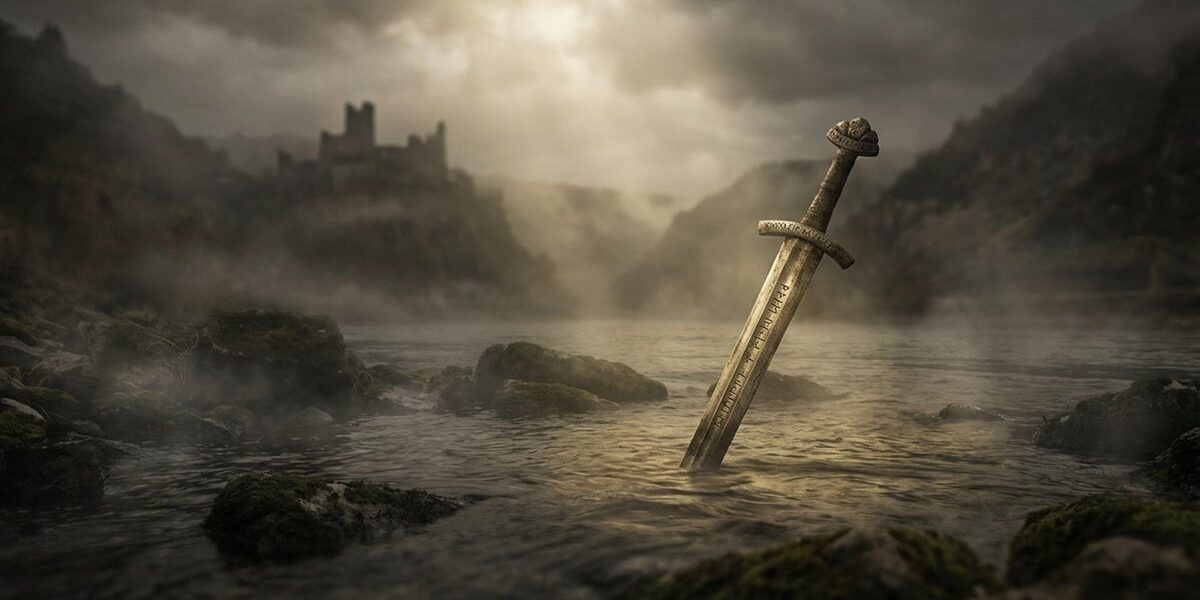
Somewhere in the Rhine near Worms, according to a legend nearly sixteen centuries old, lies a treasure of immeasurable value. The Nibelungenhort — the Nibelungen hoard — was sunk in the river by the villain Hagen von Tronje to keep it from his enemies. No one has ever found it. The story of how that treasure was won, cursed, and lost is the core of the Nibelungenlied, the most important heroic epic in German literature.
The remarkable thing about the Nibelungen saga is that it began with a real event. In 436 CE, a Hunnic army destroyed the Burgundian kingdom at Worms on the Rhine, killing King Gundahar and much of his court. From that historical catastrophe grew a literary tradition that spans more than 1,500 years, from oral poetry to medieval manuscript to Richard Wagner’s opera stage.
The Historical Kernel: Burgundians on the Rhine
The Burgundians were a Germanic people who established a kingdom on the left bank of the Rhine in the early 5th century, with Worms as their capital. Their kingdom was part of the complex patchwork of Roman and Germanic power that characterized the late Roman period along the Rhine.
In 436 CE, the Roman general Aetius sent Hunnic mercenaries against the Burgundians. The attack was devastating: the kingdom was destroyed, and the Roman chronicler Prosper of Aquitaine recorded that King Gundahar was killed along with roughly 20,000 of his people. The survivors were resettled by the Romans in the Sapaudia region, which is now Savoy in southeastern France.
This destruction was so sudden and complete that it left a deep impression on the collective memory of the Rhine region. Over the following centuries, the historical facts merged with older mythological material — tales of dragon-slayers, enchanted gold, and supernatural beings — to produce the story that would eventually be written down as the Nibelungenlied.
The Nibelungenlied: A Medieval Masterpiece
The Nibelungenlied (Song of the Nibelungs) was composed around 1200 CE by an anonymous poet, likely in the region of Passau in present-day Bavaria. Written in Middle High German, it consists of roughly 2,400 stanzas divided into 39 chapters (âventiuren).
The story follows two arcs. In the first, the hero Siegfried arrives at Worms, wins the hand of the Burgundian princess Kriemhild, and is treacherously murdered by Hagen von Tronje, who stabs him in the back at a forest spring. Hagen then seizes the Nibelungen treasure and sinks it in the Rhine.
In the second arc, Kriemhild marries Attila (Etzel) the Hun and, after years of patience, invites the Burgundians to his court. There, she orchestrates a bloodbath of revenge. Nearly every major character dies. The poem ends in total destruction — a catastrophe without redemption, unusual for medieval literature.
The Nibelungenlied was rediscovered in 1755 and quickly recognized as a work of national importance. In 2009, UNESCO inscribed the three oldest manuscripts (designated A, B, and C) on its Memory of the World Register, recognizing the poem as a document of outstanding universal significance.
Wagner’s Ring: The Rhine Goes to the Opera
Richard Wagner (1813–1883) drew on the Nibelungen material — along with the older Norse Edda and Völsunga saga — for his four-opera cycle Der Ring des Nibelungen, composed between 1848 and 1874 and first performed as a complete cycle at the Bayreuth Festival in 1876.
Wagner’s version departs significantly from the Nibelungenlied. He reached back to the older, more mythological sources, placing gods, giants, and dwarves at the center of the story. But the Rhine remains the constant. The cycle opens with the three Rhinemaidens (Rheintöchter) guarding a lump of magical gold at the bottom of the river. When the dwarf Alberich steals the gold and forges it into a ring of power, he sets in motion a chain of events that will destroy the gods themselves.
The Ring cycle — Das Rheingold, Die Walküre, Siegfried, and Götterdämmerung — runs approximately 15 hours in total and is one of the most ambitious works in the history of Western music. Its influence extends far beyond opera: J.R.R. Tolkien’s Lord of the Rings draws on similar source material, and the image of a cursed ring of power has become a permanent fixture of fantasy literature.
The Nibelungen in Worms Today
Worms has embraced its role as the city of the Nibelungs. The Nibelungenmuseum, built into the medieval city wall and opened in 2001, uses multimedia installations to tell the story from the historical Burgundians to Wagner and beyond. Since 2002, the city has hosted the Nibelungen-Festspiele, an annual open-air theater festival held on the square in front of the Worms Cathedral. Each year, a newly commissioned play reinterprets the Nibelungen material for a contemporary audience.
The Nibelungen Bridge, a modern road bridge crossing the Rhine at Worms, carries the name as a daily reminder. And the question of the sunken treasure — the Rheingold — continues to surface in local lore. No serious search has been conducted, but the idea that somewhere beneath the Rhine’s current lies a hoard of cursed gold remains one of the river’s most persistent stories. It shares this mythic quality with the Loreley legend, another tale inseparable from the Rhine.
The Nibelungen saga is a case study in how history becomes legend. A 5th-century military disaster at a Rhine crossing was transformed, over seven centuries, into one of the foundational texts of German literature. Wagner then lifted the material onto the operatic stage, giving it a mythological grandeur that the original poet might not have recognized. Through all its transformations, the Rhine remains the story’s anchor — the river where the gold was found, the river where the gold was hidden, and the river that runs through the cultural identity of the region to this day.