Invasive Species in the Rhine: How the Round Goby Conquered Europe’s Busiest River
When engineers completed the Rhine-Main-Danube Canal in 1992, they celebrated a navigation milestone: a continuous waterway from the North Sea to the Black Sea, fulfilling a vision that dated back to Charlemagne. What they also built, inadvertently, was a biological superhighway. Species that had been separated by continental watersheds for millennia suddenly had a corridor. And they used it.
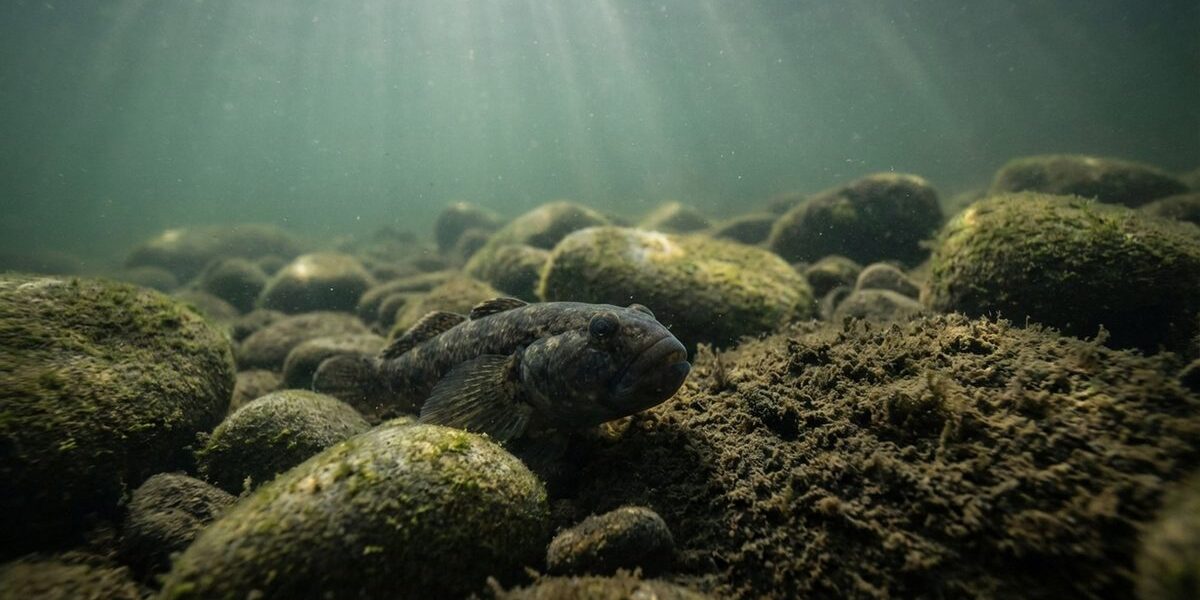
The most successful traveller was the round goby (Neogobius melanostomus). First detected in the Rhine in 2008, this small, bottom-dwelling fish from the Ponto-Caspian region — the area around the Black and Caspian Seas — now dominates the river’s fish community to an extent that would have seemed impossible two decades ago: 93.5% of all fish catches in the Lower Rhine (Niederrhein) between 2010 and 2020 were round gobies (Source: ICPR Report 208; PLOS ONE, 2024).
The Canal That Changed Everything
The Rhine-Main-Danube Canal connects the Rhine’s tributary Main with the Danube at Kelheim, Bavaria, via a 171-kilometre artificial waterway that crosses the European watershed. It was designed for 1,500-tonne barges, but the most consequential cargo it carried was invisible: organisms in ballast water, attached to hulls, or swimming through the canal under their own power.
The round goby likely invaded the Rhine via two routes simultaneously. A genetic analysis published in PLOS ONE in 2024 found evidence for separate invasion pathways — one population entered through the canal from the Danube, where the species had been established since 2004, and another arrived from the Rhine delta region, where gobies appeared via ballast water from ships originating in the Black Sea (Source: PLOS ONE, 2024). This dual invasion accelerated the species’ spread across the Rhine system and increased its genetic diversity, making the population more adaptable.
From first detection to total dominance took roughly a decade. By 2012, round gobies were locally abundant near Düsseldorf. By 2015, they were common throughout the Lower Rhine. By 2020, they had colonised the entire Rhine system, including major tributaries like the Moselle, Neckar, and Main (Source: ICPR Report 208).
Why the Goby Wins
The round goby’s extraordinary success in the Rhine comes down to a combination of biological traits that make it supremely competitive in modified river environments:
- Dietary flexibility: Round gobies are generalist feeders, consuming zebra and quagga mussels, insect larvae, fish eggs, small crustaceans, and virtually any organic matter they can fit in their mouths
- Prolific reproduction: Females can spawn multiple times per season, producing thousands of eggs per year. Males guard nests aggressively under stones, giving offspring significantly higher survival rates than species that scatter unguarded eggs
- Habitat match: The artificial stone embankments (rip-rap) lining most of the Rhine’s navigable stretches provide ideal goby habitat — abundant crevices for nesting and shelter, plus dense populations of mussels for food
- Thermal tolerance: Gobies tolerate a wide temperature range (0–30°C), giving them an advantage as the Rhine warms under climate change
In essence, two centuries of river engineering — channelisation, rip-rap armouring, and the construction of the Rhine-Main-Danube Canal — created the perfect conditions for an invader that did not arrive until 2008. The Rhine was inadvertently optimised for the round goby before anyone knew the species existed in Western Europe.
“The round goby probably colonises the entire water system of the Rhine, including the large tributaries, and is already one of the dominant fish species in large parts of the river.” — Source: ICPR Report No. 208, Immigrated Goby Species in the Rhine System
The Full Invasion: Not Just Gobies
The round goby is the most visible invasive species in the Rhine, but it is far from alone. The Ponto-Caspian corridor has delivered an entire community of non-native organisms that are collectively reshaping the river’s ecology:
- Killer shrimp (Dikerogammarus villosus) — arrived via the canal corridor after 1992 and has largely displaced native amphipod species (particularly Gammarus pulex) throughout the main channel. Despite reaching only about 3 cm in length, it has unusually powerful mouthparts and preys aggressively on native invertebrates, damselfly nymphs, small fish, and fish eggs
- Quagga mussel (Dreissena bugensis) — a filter-feeding bivalve that colonises hard surfaces in enormous densities. It is outcompeting the already-invasive zebra mussel (Dreissena polymorpha) and altering nutrient cycles by filtering vast quantities of phytoplankton from the water column
- Chinese mitten crab (Eriocheir sinensis) — present in Rhine tributaries since the early 20th century (first recorded in 1912), this catadromous crab burrows into riverbanks, causing erosion, and migrates between freshwater and the North Sea to breed
- Ponto-Caspian amphipods — multiple species of Chelicorophium, Echinogammarus, and Dikerogammarus have replaced native amphipod communities across the Lower Rhine, fundamentally altering the macroinvertebrate food web
Ecological Consequences
The impact of these invasions on the Rhine’s native fish and invertebrate communities is significant, multi-layered, and likely irreversible at the system scale:
Fish community restructuring: Round gobies compete directly with native bottom-dwelling species — bullhead (Cottus gobio) and stone loach (Barbatula barbatula) — for food and shelter. Studies from the Lower Rhine show that bullhead populations have declined sharply in areas where goby densities are highest. Gobies also prey on the eggs of other fish species, potentially suppressing recruitment of native populations.
Invertebrate displacement: The killer shrimp has fundamentally altered the macroinvertebrate community structure. Native amphipods that once dominated leaf litter decomposition — a critical ecosystem function — have been largely replaced by Ponto-Caspian species in the main channel. The ecological consequences of this shift for nutrient cycling and food web dynamics are still being studied.
Benthic-pelagic coupling: The quagga mussel, through its extraordinary filtration capacity (a single mussel can filter roughly one litre of water per day), can alter water clarity and nutrient dynamics at the system level. Dense mussel beds strip phytoplankton from the water column and redirect energy to the river bottom — a process that favours bottom-dwelling organisms (including gobies) at the expense of open-water fish species and the zooplankton they feed on. These filtration effects have direct implications for Rhine water quality monitoring and management.
Can Anything Be Done?
The honest answer is: not much, at least not in terms of reversing established invasions. Once an invasive species establishes a self-sustaining population in a large, connected river system like the Rhine, eradication is effectively impossible. There is no selective poison for round gobies, no barrier that can separate them from native species in a shared river, no predator introduction that would not create new problems.
Management focuses on limiting further introductions through ballast water regulations and hull-cleaning requirements, monitoring ecological impacts, and identifying natural control mechanisms. Some researchers have noted that native predators — particularly pike-perch and European perch — are increasingly feeding on round gobies, potentially providing some top-down population regulation.
Others point out that the goby invasion, while ecologically transformative, has not caused documented local extinctions in the Rhine. Native species have been displaced from the main channel and reduced in abundance, but most persist in tributaries and habitats less favourable to gobies. Whether this coexistence is stable or represents a slow decline toward eventual loss remains an open scientific question.
The Rhine’s invasive species crisis is, in the end, a reminder that ecological recovery from pollution does not guarantee a return to historical conditions. The river that recovered from Sandoz is not the Rhine of 1850 — or even of 1950. It is a new ecosystem, connected to distant biogeographic regions by human engineering, and increasingly dominated by species that were never supposed to be here. Managing this new reality, rather than trying to reverse it, may be the most honest and effective path forward.