Climate Change and the Rhine: Rising Temperatures, Droughts & What Models Predict by 2100
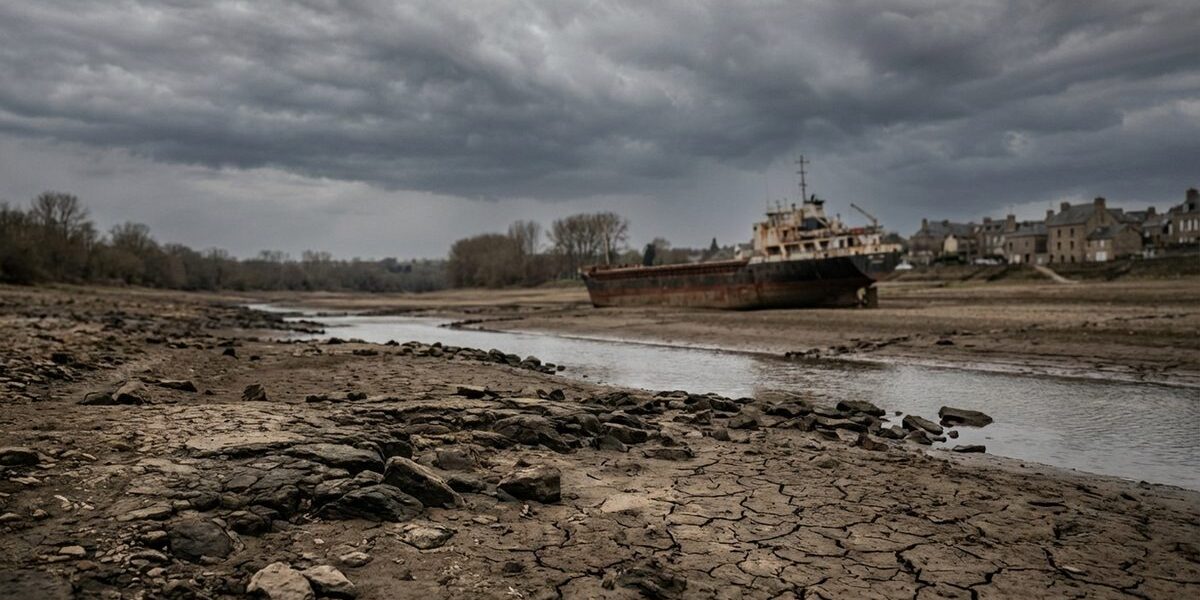
In August 2022, the Rhine at Kaub — a narrow gauge point between Mainz and Koblenz that serves as the bottleneck for Europe’s busiest inland waterway — dropped below 40 centimetres. The normal level is around 200 cm. Barges that usually carry 3,000 tonnes of cargo were limited to 30% capacity or stopped entirely. Freight costs spiked from 20 euros per tonne to 94 euros per tonne in a matter of weeks. Chemical plants along the Rhine reduced production. Coal deliveries to power plants faltered during an energy crisis that had already sent electricity prices to record levels.
This was not unprecedented. In 2018, the same gauge had hit similarly extreme lows, triggering a 1.5% drop in German industrial production and shaving an estimated 0.4% off GDP in a single month — equivalent to roughly 1.5 billion euros in lost output (Source: Kiel Institute for the World Economy, 2019). Two major droughts in four years raised a question that had existed in climate models but was now viscerally real: what happens when the Rhine — artery of Europe’s largest economy — gets systematically hotter and drier?
The Numbers: How Much Warmer, How Much Drier
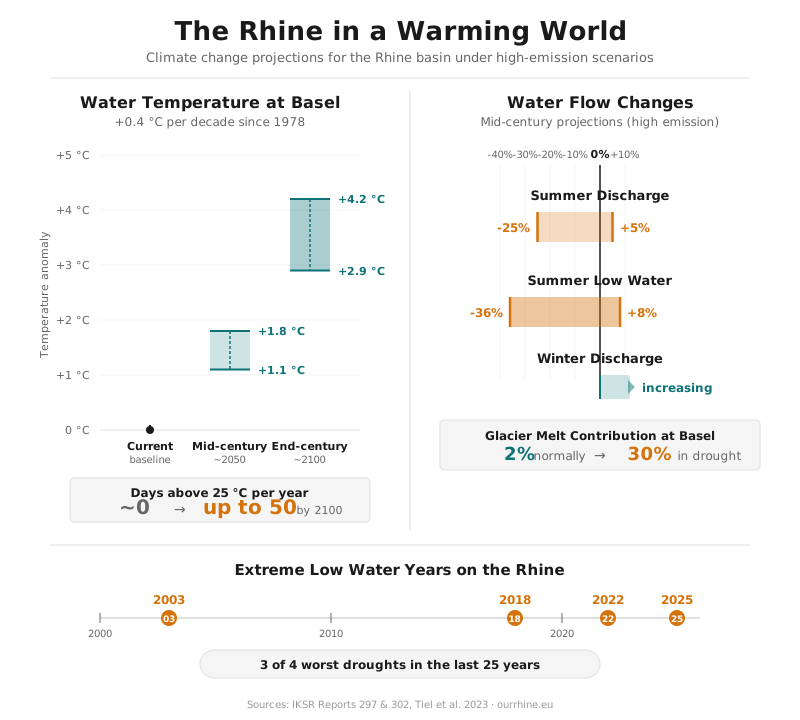
A joint study by the ICPR and Deltares (the Dutch water research institute), published in 2023, provides the most comprehensive projections for the Rhine under climate change. The findings are stark and quantitative:
- Water temperature: Annual average could rise by 2.9–4.2 degrees C by 2100 compared to the 1990–2010 baseline, depending on the emissions scenario (Source: ICPR/Deltares, 2023)
- Mid-century warming: A +1.1 to +1.8 degrees C increase is projected by 2050 — within the planning horizon of infrastructure being built today
- Hot days: Days with water temperatures above 21.5 degrees C — the threshold at which cold-water species begin to suffer acute stress — will increase from 32 per year to 106 per year by century’s end
- Cold days: Days with water temperatures below 10 degrees C will fall from 170 to 104 per year, shrinking the thermal window for cold-water species reproduction
- Historical trend: At Basel, average annual water temperature has already risen by 0.4 degrees C per decade since 1978 — a warming rate that is consistent with global trends but locally amplified by reduced summer flows
“Climate change on the Rhine: water temperature expected to rise by up to 4.2 degrees C by the end of the century.” — Source: ICPR Press Release, 2023
The warming is not a future projection — it is a trend already underway for nearly five decades, with measurable consequences for the river’s ecology and the industries and communities that depend on it.
From Glacier-Fed to Rain-Fed: A Hydrological Transformation
The Rhine’s hydrology is changing at a fundamental level that goes beyond temperature. Historically, the river benefited from a dual water source: snowmelt and glacier runoff from the Swiss Alps provided steady, reliable summer flows, while rainfall across the basin sustained the river year-round. This mix gave the Rhine a distinctive flow regime — high in late spring from snowmelt, moderate in summer sustained by glacier melt, and steady through autumn and winter from precipitation. The alpine glacial buffer kept summer low-water events relatively rare and moderate.
As Alpine glaciers retreat — many expected to lose 50–80% of their volume by mid-century — the Rhine is transitioning to a predominantly rain-fed river. The Alpine Rhine is ground zero, but the effects cascade downstream to the Ruhr and Dutch delta:
- Summer low flows will become more frequent and more extreme as the glacial buffer disappears and summer rainfall becomes more erratic
- Winter and spring floods will intensify as more precipitation falls as rain rather than snow, running off immediately rather than being stored in snowpack
- Flow volatility will increase — the Rhine will swing between damaging extremes more frequently, making it harder for both ecosystems and economies to plan around predictable water availability
The Rhine is not the only European river facing this transition, but its economic importance — carrying approximately 80% of Germany’s inland waterway freight — makes the stakes exceptionally high.
Ecological Impact: Cold-Water Species Under Pressure
Warmer water holds less dissolved oxygen. For aquatic organisms, this creates a cruel double stress: higher metabolic demands (because warmer water increases metabolic rate in cold-blooded organisms) combined with less oxygen available to meet those demands. The ICPR identifies several native species at particular risk from the projected warming:
- Grayling (Thymallus thymallus) — a cold-water specialist already declining in the Upper Rhine and its tributaries. Grayling require sustained periods below approximately 18 degrees C. As their thermal niche shrinks geographically, populations are being squeezed into higher-altitude refugia
- Brown trout (Salmo trutta) — needs water below approximately 20 degrees C for sustained periods and requires cold, oxygenated water for egg incubation. Already stressed in lower-altitude tributaries during summer heat events
- Atlantic salmon — the returning flagship species of Rhine ecological recovery requires cold, oxygenated tributaries for spawning and juvenile development. Rising temperatures narrow the available suitable habitat within the already-limited set of accessible tributaries
- Macroinvertebrates — pollution-sensitive insect larvae (mayflies, stoneflies, caddisflies) that serve as biological indicators of water quality and form the base of the food web are also affected by thermal stress, particularly during low-water summer events
Meanwhile, warm-water species expand their range and abundance. Wels catfish (Silurus glanis), already Europe’s largest freshwater predator at lengths exceeding 2 metres, thrive in warmer conditions and are expanding in the Rhine. Invasive species from warmer climates — including the round goby — may benefit further from rising temperatures. The Rhine’s fish community is effectively shifting southward in ecological character, even as it remains geographically in central Europe.
Economic Fallout: When the Rhine Runs Low
The Rhine carries approximately 80% of Germany’s inland waterway freight. When water levels drop, shipping capacity drops with them. At Kaub, when levels fall below 78 cm for 30 days, German industrial production declines by roughly 1% (Source: Kiel Institute for the World Economy).
The 2018 and 2022 droughts demonstrated how quickly hydrological stress cascades into economic damage:
- 2018: Low water persisted for weeks. German GDP fell by an estimated 0.4% in affected months. BASF in Ludwigshafen reduced production because raw materials could not be delivered by barge
- 2022: Freight rates spiked nearly fivefold. Coal deliveries to power plants were disrupted during Europe’s worst energy crisis in decades. Container shipping between Rotterdam and Basel was largely suspended for weeks
These are not abstract projections from distant future scenarios. They are recent events, separated by just four years, and climate models indicate that such low-water crises will recur with increasing frequency. A river system designed, engineered, and economically calibrated for a climate that no longer exists requires fundamental rethinking.
Adaptation: What Is Being Done
Adaptation strategies fall into three categories, each operating at different timescales and levels of ambition:
Infrastructure
Germany has invested in low-water-adapted vessels with shallower draughts. Discussions continue about deepening critical bottlenecks like Kaub, though dredging carries environmental trade-offs. Upper-catchment storage reservoirs are being evaluated for supplementing summer flows.
Ecological Adaptation
The ICPR’s Rhine 2040 programme includes climate adaptation as a central pillar. Floodplain restoration along the Upper and Lower Rhine aims to create thermal refugia — cooler side channels and reconnected oxbow lakes where cold-water species can shelter during summer heat events. Riparian shading — planting trees along riverbanks and tributary channels — can reduce local water temperatures by 1–3 degrees C, providing meaningful relief at the local scale. These nature-based solutions provide dual benefits: ecological resilience and flood retention capacity.
Policy and Coordination
The Central Commission for Navigation on the Rhine (CCNR) published its “Act Now!” reflection paper in 2022, calling for coordinated international action on low-water management across the basin. EU Water Framework Directive objectives are being reviewed in light of climate projections. Germany’s federal government has established a programme to improve Rhine navigability under low-water conditions, though the tension between ecological goals and navigation deepening remains unresolved.
I find the Rhine’s climate challenge striking precisely because of its dual nature. This is simultaneously an ecological crisis and an economic one, and neither can be addressed in isolation. The same water level that kills grayling also halts barges. The same warming that shifts fish communities also threatens industrial cooling water intake for power plants and chemical facilities. The Rhine forces us to confront an uncomfortable truth: rivers are not just ecosystems or transport routes — they are both, inseparably, and climate change does not distinguish between the two.