Microplastics in the Rhine: 191 Million Particles a Day Flowing Towards the North Sea
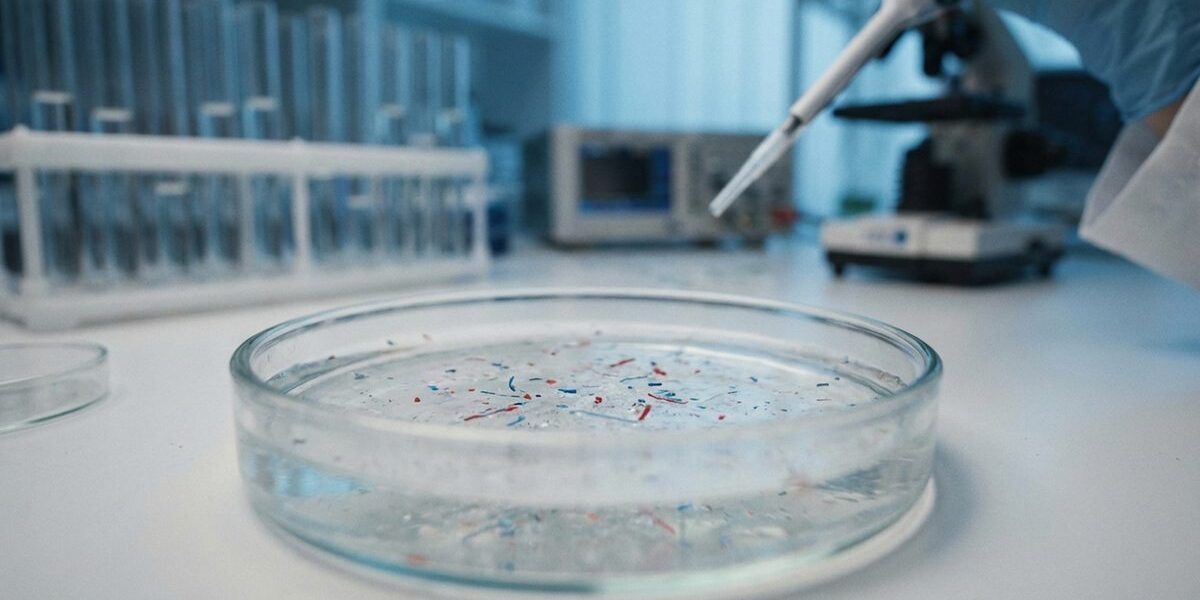
The pollutants that nearly killed the Rhine in the 20th century were visible: foam on the water surface, discoloured industrial effluent, dead fish on riverbanks. The 80-billion-euro cleanup targeted these visible threats and largely succeeded. But the Rhine’s newest pollution problem is invisible to the naked eye: particles of plastic smaller than 5 millimetres, flowing in concentrations that place the Rhine among the most microplastic-polluted rivers ever studied anywhere in the world.
In 2015, a research team from the University of Basel published a landmark study in the journal Scientific Reports. They sampled surface water at 11 locations along 820 kilometres of the Rhine, from Basel to Rotterdam. Their central finding: the Rhine delivers an estimated 191 million microplastic particles to the North Sea every single day — and that figure counts only particles captured at the water surface, meaning the true load through the full water column is substantially higher (Source: Mani et al., Scientific Reports, 2015).
The Data: Where Microplastics Concentrate
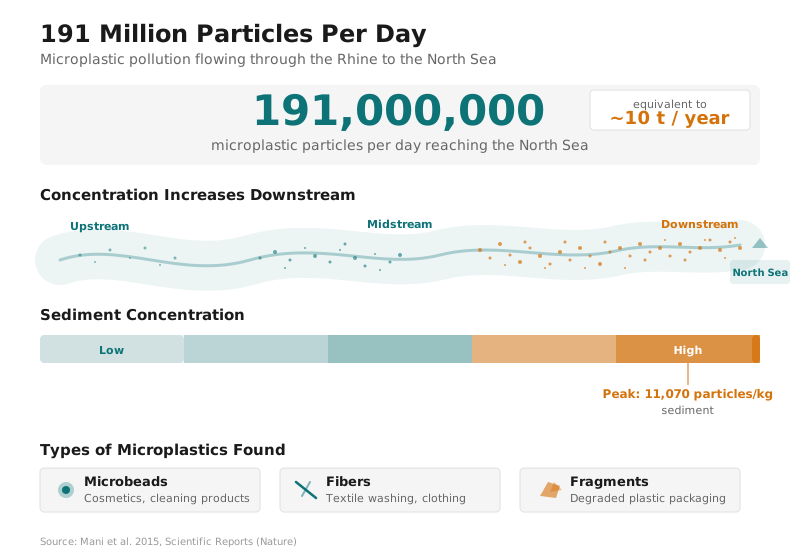
Microplastics were present in every single sample the Basel research team collected across the 820-kilometre study reach. Not a single location — not even the relatively pristine stretch near Basel — was free of plastic particles. The average concentration was 892,777 particles per square kilometre of surface water (or equivalently, 4,960 particles per 1,000 cubic metres). But the distribution along the river was far from uniform:
- Rhine-Ruhr metropolitan area (Düsseldorf to Duisburg): Peak concentrations reached four times the average — reflecting the region’s 10 million inhabitants, its dense industrial infrastructure, and the concentration of wastewater treatment plant outflows that discharge into the Rhine and its tributaries
- Downstream of major cities: Concentrations consistently spiked below urban centres including Cologne, Bonn, and Düsseldorf, pointing to municipal wastewater and urban stormwater runoff as primary local sources
- Upper Rhine (Basel to Mainz): Lower but still significant concentrations, increasing progressively downstream as each tributary and city added to the cumulative load
- Rhine delta (Netherlands): High concentrations reflecting the accumulated load from the entire 185,000 square kilometre catchment
A follow-up study published in Environmental Science & Technology in 2024, based on 22 months of continuous sampling near Basel, confirmed that microplastic concentrations fluctuate significantly with river discharge and season — higher during rainfall events that wash particles from land surfaces into waterways — but are present year-round without exception (Source: Environmental Science & Technology, 2024).
Where Do They Come From?
Microplastics in the Rhine originate from a surprisingly diverse set of sources. Understanding these sources is essential for any effective reduction strategy, because unlike the point-source industrial pollution of the 20th century, microplastic contamination is overwhelmingly diffuse — it comes from everywhere:
Textile Fibres
Every wash cycle of a domestic washing machine releases hundreds to thousands of synthetic fibres — from polyester, nylon, and acrylic clothing — into wastewater. Conventional treatment plants capture a significant proportion through settling and filtration, but not all. Given the roughly 20 million people living in the Rhine basin, even a small per-capita leakage rate translates to an enormous cumulative contribution.
Tyre Wear
Vehicle tyres shed microplastic particles continuously during normal driving. These particles — a mixture of synthetic rubber and filler compounds — are deposited on road surfaces and washed by rain into storm drains, which in many municipalities discharge into waterways without treatment. European studies estimate that tyre wear is one of the single largest sources of microplastics entering river systems, potentially exceeding textile fibres in total mass. These temperature shifts also influence the spread of invasive species throughout the Rhine system.
Industrial Pellets (Nurdles)
Pre-production plastic pellets (commonly called nurdles), approximately 3–5 mm in diameter, escape into the environment during manufacturing, packaging, and transport. The Rhine basin hosts numerous plastics manufacturing facilities, particularly in the Ruhr region, the Netherlands, and along the Upper Rhine chemical corridor between Basel and Ludwigshafen.
Fragmentation of Larger Waste
Larger plastic items — bottles, food packaging, bags, agricultural films — that enter the river or its tributaries gradually break down into smaller particles through UV exposure, mechanical abrasion, and microbial degradation. This fragmentation process means that every piece of visible plastic litter is, over time, a future source of thousands of microplastic particles. The process is slow but relentless and irreversible.
“The Rhine has one of the highest microplastics concentrations so far measured in rivers.” — Source: University of Basel, 2015
Ecological and Health Concerns
The ecological effects of microplastics in river systems are an active and rapidly expanding area of research. The picture that is emerging is concerning, even if scientific certainty on long-term impacts has not yet been fully established:
- Ingestion by aquatic organisms: Fish, mussels, insect larvae, and zooplankton ingest microplastics that resemble food particles. Laboratory studies show that ingestion can cause physical damage to digestive systems, reduce feeding efficiency, and impair growth in affected organisms
- Chemical transport (the Trojan horse effect): Microplastic particles act as vectors for other pollutants. Hydrophobic organic chemicals — including legacy contaminants like PCBs (polychlorinated biphenyls) and PAHs (polycyclic aromatic hydrocarbons) — adsorb onto plastic surfaces at concentrations far higher than in surrounding water. These chemicals can be released inside organisms upon ingestion, delivering concentrated doses of toxic substances
- Food web transfer and bioaccumulation: Microplastics move through food webs from smaller organisms to larger predators. Small invertebrates ingest particles; fish eat the invertebrates; birds and mammals eat the fish. Whether concentrations increase at higher trophic levels (biomagnification) is still being investigated, but transfer across at least two trophic levels has been documented
- Sediment accumulation: Heavier microplastic particles and fibres settle into river sediments, where they can persist for decades or longer. Sediment-bound microplastics can be remobilised during flood events, creating pulses of contamination long after the original input
For the approximately 20 million people who depend on the Rhine for drinking water extraction — particularly in the Netherlands and along the German Lower Rhine — microplastics add another dimension to water treatment requirements. Current drinking water treatment processes (flocculation, sand filtration, activated carbon) are generally effective at removing most particles, but the long-term health effects of chronic low-level exposure to micro- and nanoplastics through drinking water, food, and air remain under active investigation by the WHO and national health agencies.
PFAS: The Other Invisible Pollutant
Microplastics share the Rhine with another class of invisible, persistent pollutants that has risen to prominence in recent years: PFAS (per- and polyfluoroalkyl substances), commonly called “forever chemicals.” These synthetic compounds, used in non-stick cookware coatings, fire-fighting foam (AFFF), waterproof outdoor clothing, food packaging, and numerous industrial processes, are characterised by carbon-fluorine bonds that are among the strongest in organic chemistry. They do not break down in the environment — hence the name.
PFAS have been detected throughout the Rhine system, in both water and sediment samples. The ICPR has identified PFAS as one of the priority substance groups for reduction under the Rhine 2040 programme. New EU drinking water regulations, which took effect in January 2026, set legally binding limit values for total PFAS in drinking water for the first time — putting significant additional pressure on Rhine water quality management and on the drinking water utilities that extract and treat Rhine water (Source: European Commission, 2026).
The challenge with both microplastics and PFAS is structurally similar: they are products of modern industrial society, dispersed through everyday consumer activity at millions of points, and extremely difficult to remove from the environment once released. Unlike the heavy metals and pesticides that dominated the 20th-century Rhine cleanup — which typically came from identifiable industrial point sources that could be regulated, treated, and monitored — microplastics and PFAS come from diffuse, ubiquitous sources. Every washing machine, every road, every non-stick pan, every rain jacket contributes.
What Is Being Done
Efforts to reduce microplastic and PFAS pollution in the Rhine operate at multiple regulatory and technical levels:
- EU regulations: The European Commission restricted the intentional addition of microplastics to products (cosmetic microbeads, agricultural coatings, sports field granules) from 2023 onward. This addresses one source category but not the dominant ones — textiles and tyres — which release microplastics unintentionally during use
- Wastewater treatment upgrades: Advanced filtration technologies — membrane bioreactors, cloth disc filters, and sand filtration with flocculant dosing — can capture the majority of textile fibres before they reach rivers. Switzerland’s 2016 mandate for advanced treatment (ozonation or activated carbon) at major wastewater plants addresses micropollutants including PFAS as a primary target and captures microplastics as a co-benefit
- Rhine 2040 targets: The ICPR programme targets a 30% reduction in micropollutant discharges by 2040. Implementation for microplastics specifically remains in an early stage, with monitoring protocols still being standardised across member states
- Stormwater management: Several German and Dutch municipalities are investing in improved stormwater treatment — retention basins, constructed wetlands, and filtration systems — to intercept tyre wear particles and other urban runoff pollutants before they reach waterways
- Industrial commitments: Operation Clean Sweep, a voluntary industry programme, aims to achieve zero pellet loss from plastics manufacturing and transport facilities. Adoption among Rhine basin facilities is growing but not yet universal
I think of the microplastics challenge as a mirror of the Rhine’s broader environmental history. In the 1970s, the river’s pollution was obvious — you could see the foam, smell the chemicals, and count the dead fish. The public outrage was immediate, the political response forceful, and the investment enormous. Today, the pollution is invisible, the sources are diffuse and democratic (we all contribute), and the health effects are uncertain though potentially significant. That combination makes it harder to mobilise the political will and financial commitment that drove the first Rhine cleanup. But 191 million particles per day — flowing unseen past riverside cities and into the North Sea — should be enough to demand the same seriousness of response.
Sources & References
- Mani et al. (2015): Microplastics Profile along the Rhine River — Scientific Reports
- ICPR: Pollution in the Rhine